Helping Growing Smiles Stay Healthy, Functional, and Confident
A healthy smile does much more than create a great first impression. Properly aligned teeth and jaws support healthy oral development, make brushing and flossing easier, improve speech, and allow children to chew comfortably. At Kidz Smile Pediatric Dentistry & Family Orthodontics, we believe every child deserves a smile that is both beautiful and healthy. That is why we proudly offer traditional braces as one of the most reliable and effective orthodontic treatments available for children and teenagers.
Traditional braces have helped millions of children achieve straighter teeth and healthier bites. Thanks to modern advancements in orthodontics, today’s braces are smaller, more comfortable, and more efficient than ever before. They remain one of the most trusted solutions for correcting everything from minor alignment concerns to more complex orthodontic issues.
Our team understands that every child develops differently. Some children benefit from early orthodontic care, while others are ready for treatment during their teenage years. We take the time to evaluate your child’s unique smile, explain every step of the process, and develop a customized treatment plan designed specifically for their needs. Throughout treatment, we focus on creating a positive experience that helps children feel comfortable, confident, and excited about their smile transformation.
Whether your child has crowded teeth, spacing issues, bite problems, or jaw alignment concerns, traditional braces provide a predictable, long lasting solution that supports healthy growth and development.
What Are Traditional Braces?
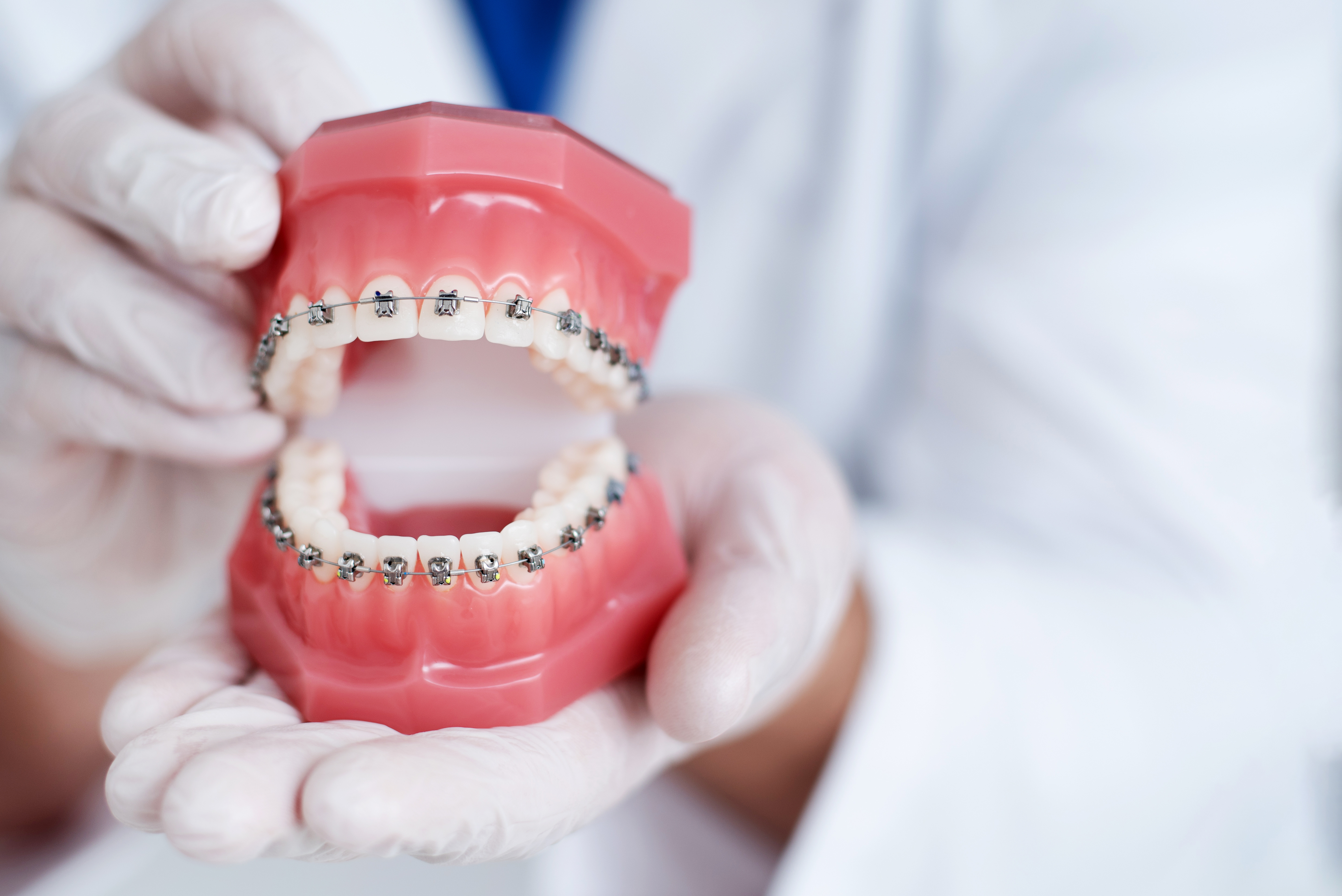
Traditional braces are a comprehensive orthodontic treatment designed to gradually move teeth into healthier, more functional positions. The system consists of small brackets that are bonded to each tooth and connected by a specialized orthodontic wire. Tiny elastic bands may also be used to help guide tooth movement according to the treatment plan.
Each part of the braces system works together to apply gentle, controlled pressure over time. As pressure is applied, the surrounding bone naturally remodels, allowing teeth to move safely into their ideal positions. This gradual process creates permanent improvements that benefit both appearance and oral health.
While braces have been used successfully for decades, modern technology has dramatically improved their comfort and effectiveness. Today’s brackets are smaller, smoother, and more discreet than older versions. Advanced orthodontic wires also allow teeth to move more efficiently while reducing discomfort throughout treatment.
At Kidz Smile Pediatric Dentistry & Family Orthodontics, we carefully monitor every stage of treatment to ensure your child’s teeth are moving safely and according to plan.
Why Children May Need Traditional Braces
Orthodontic problems often develop as children grow. Some issues are inherited, while others result from habits such as thumb sucking, early tooth loss, injuries, or differences in jaw development. Without treatment, these concerns may become more significant over time.
One of the most common reasons children need braces is crowded teeth. When there is not enough room for permanent teeth to erupt properly, teeth may overlap, twist, or become difficult to clean. Crowding increases the risk of cavities, plaque buildup, and gum disease because toothbrushes and floss cannot easily reach every surface.
Spacing problems are another common concern. Large gaps between teeth may affect the appearance of a child’s smile and sometimes indicate underlying developmental issues. Braces can gradually close these spaces while improving overall alignment.
Bite problems also frequently require orthodontic treatment. An overbite occurs when the upper front teeth overlap the lower teeth excessively. An underbite happens when the lower teeth extend beyond the upper teeth. Crossbites, open bites, and deep bites can all affect chewing, speech, jaw comfort, and long term oral health.
Correcting these concerns early often prevents additional complications later in life and supports healthy facial growth throughout childhood and adolescence.
The Importance of Early Orthodontic Evaluations
Many parents wonder when their child should first see an orthodontic provider. The American Association of Orthodontists recommends that children receive an orthodontic evaluation around age seven. This does not necessarily mean braces are needed immediately, but it allows us to monitor jaw development, tooth eruption, and bite alignment while your child is still growing.
At this age, children typically have a combination of baby teeth and permanent teeth, making it easier to identify developing orthodontic concerns before they become more complicated.
Early evaluations allow us to determine whether immediate treatment would benefit your child or whether careful observation is the best approach. Some children benefit from early intervention, while many simply return for periodic monitoring until the timing is ideal for braces.
By identifying concerns early, we can often simplify future treatment, reduce treatment time, and improve overall outcomes.
Conditions Traditional Braces Can Correct
Traditional braces are one of the most versatile orthodontic treatment options available. They can address a wide variety of alignment and bite concerns, including crooked teeth, crowded teeth, gaps between teeth, rotated teeth, overbites, underbites, crossbites, open bites, deep bites, and jaw alignment issues.
Because braces provide precise control over tooth movement, they are often recommended for more complex orthodontic cases that require detailed adjustments throughout treatment.
Proper alignment does much more than improve appearance. Straight teeth are easier to clean, healthier for the gums, and less likely to develop uneven wear over time. A balanced bite also reduces stress on the jaw joints while supporting comfortable chewing and speaking.
What to Expect During Your Child’s Braces Journey
Every orthodontic journey begins with a comprehensive evaluation. During your child’s first visit, we carefully examine the teeth, jaws, facial development, and bite. Digital X rays, photographs, and impressions or digital scans allow us to gather detailed information that helps guide treatment planning.
Once we determine that traditional braces are the right solution, we explain every step of treatment so both parents and children know exactly what to expect.
The placement appointment is comfortable and straightforward. Each bracket is carefully bonded to the teeth before the orthodontic wire is secured into place. The entire appointment generally takes one to two hours.
Most children experience mild soreness during the first few days after braces are placed. This is completely normal and usually improves quickly as the mouth adjusts to the new appliances.
Throughout treatment, your child will visit our office regularly for adjustments. During these appointments, we evaluate progress, replace wires or elastics as needed, and continue guiding teeth into their ideal positions.
These routine visits allow us to monitor growth and ensure treatment stays on schedule.
How Long Will Traditional Braces Take?
Every child’s orthodontic needs are different, so treatment time varies depending on the complexity of the case, the stage of dental development, and how consistently instructions are followed.
Many children wear braces for approximately eighteen to twenty four months, although some treatments may be shorter or longer. Children who wear rubber bands as directed, maintain excellent oral hygiene, and attend all scheduled appointments often complete treatment more efficiently.
Our team closely monitors your child’s progress throughout treatment and keeps you informed every step of the way.
Caring for Braces
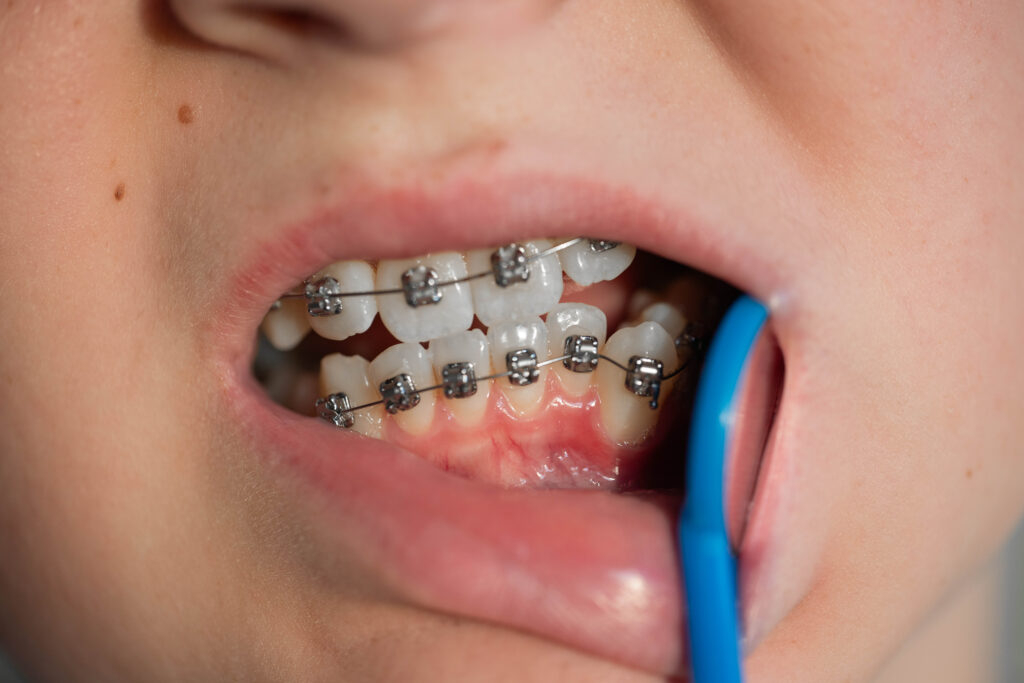
Keeping braces clean is one of the most important parts of successful orthodontic treatment. Brackets and wires create additional areas where food particles and plaque can collect, making daily brushing and flossing even more important.
We teach every child and parent the proper techniques for cleaning around braces. Brushing after every meal and flossing each day help prevent cavities, gum inflammation, and permanent white spots from developing on the teeth.
Regular professional cleanings also remain an essential part of maintaining excellent oral health during orthodontic treatment.
Certain foods should be avoided because they can damage brackets or wires. Sticky candy, chewing gum, caramel, popcorn kernels, hard candy, ice, and crunchy snacks may increase the risk of broken appliances. Softer foods and careful chewing help keep braces functioning properly throughout treatment.
If a bracket becomes loose or a wire causes irritation, our team is always available to provide guidance and schedule repairs when necessary.
The Benefits of Traditional Braces Beyond Straight Teeth
Many families initially seek orthodontic care because they want straighter teeth, but the benefits extend far beyond appearance.
Properly aligned teeth are significantly easier to clean, reducing the risk of cavities and gum disease throughout life. Improved alignment also allows the upper and lower teeth to fit together more naturally, creating a healthier bite that reduces unnecessary wear on tooth surfaces.
Children with corrected bites often experience improved chewing efficiency and clearer speech. Balanced jaw alignment may also reduce strain on the jaw joints and surrounding muscles.
Perhaps one of the most rewarding benefits is the increase in confidence that many children experience. A smile they feel proud to share can positively influence social interactions, school experiences, extracurricular activities, and overall self esteem.
Orthodontic treatment is truly an investment in both lifelong oral health and emotional well being.
Why Families Choose Traditional Braces
While newer orthodontic options continue to emerge, traditional braces remain one of the most dependable and effective treatments available.
Unlike removable aligners, braces remain securely attached to the teeth throughout treatment, allowing continuous progress without relying on patient compliance. This makes them especially beneficial for younger children who may have difficulty remembering to wear removable appliances for the recommended number of hours each day.
Traditional braces also provide exceptional precision when correcting complex orthodontic issues involving multiple teeth or jaw relationships.
For many children and teenagers, braces continue to offer the most predictable path toward a healthy, lasting smile.
Our Family Centered Approach to Orthodontic Care
At Kidz Smile Pediatric Dentistry & Family Orthodontics, we know that orthodontic treatment is a journey shared by the entire family. Parents want answers, children want reassurance, and everyone appreciates a caring team that communicates openly throughout the process.
From your child’s first consultation through the day the braces come off, we focus on education, encouragement, and personalized care. Every treatment plan is customized to support your child’s unique dental development while respecting your family’s goals and schedule.
We create a welcoming environment where children feel comfortable asking questions and celebrating milestones along the way. Our team enjoys watching smiles transform, but even more importantly, we enjoy seeing children’s confidence grow throughout the process.
Because we specialize in pediatric dentistry and family orthodontics, we understand the unique needs of growing smiles. We combine orthodontic expertise with compassionate pediatric care to provide an experience that is positive, supportive, and centered around your child’s long term oral health.
Helping Your Child Enjoy a Lifetime of Healthy Smiles
Choosing orthodontic treatment is an important investment in your child’s future. Properly aligned teeth support better oral hygiene, healthier jaw development, comfortable function, and a smile that lasts for years to come.
At Kidz Smile Pediatric Dentistry & Family Orthodontics, we are committed to making every step of the braces journey as smooth and rewarding as possible. From early orthodontic evaluations to comprehensive treatment and long term follow up care, we are here to help your child achieve the healthy, confident smile they deserve.
If you have questions about traditional braces or would like to schedule an orthodontic consultation, our team looks forward to welcoming your family and helping your child take the next step toward a lifetime of beautiful, healthy smiles.